REVIEW · POKHARA
7 Days Thai Yoga Massage Training and Retreat in Begnas Nepal
Book on Viator →Operated by Karmayogi Wellness and School · Bookable on Viator
Thai massage here is more than a massage. This 7-day course in Pokhara pairs Thai massage technique with breath, movement, and meditation, so you’re not just copying moves—you’re learning how the practice is supposed to work in the body. You’ll train at Karmayogi Yoga Retreat and School with a small group (max 20), starting daily practice under the guidance of Raj and his team.
Hands-on training is the biggest reason I think this stands out: you’ll practice 5–6 hours per day with coaching, not just watch demos. The second big win is how the program links physical sequences to inner awareness, using meditation and attention to the body’s energy lines (nadis) so your sessions feel connected, not mechanical.
One consideration: food and accommodation aren’t included, so you’ll need to plan and budget for meals and lodging around the training schedule. Also, the style is physical—if you’re dealing with serious injuries or pain, you’ll want to be honest with the instructors early.
In This Review
- Key things to know before you go
- Thai massage training in Pokhara: what you’re really signing up for
- Daily flow: 5–6 hours of practice, plus yoga and meditation
- Learning the core sequence (and why “basics” matter)
- Nadis and energy-line awareness: useful theory, applied in practice
- Yoga + meditation as a massage skill (not a separate class)
- Who teaches you at Karmayogi (Raj and the support team)
- Pokhara’s lakeside base: the quiet advantage of location
- Price and value: $487 for 7 days of skill-building
- How to get the most out of the week (practical advice)
- Who should book this Thai yoga massage retreat
- Practical “before you go” checklist (based on what’s included and missing)
- Should you book the 7 Days Thai Yoga Massage Training in Begnas, Nepal?
- FAQ
- How long is the Thai Yoga Massage Training and Retreat?
- Where does the training take place?
- What time does the experience start?
- How much does it cost?
- What’s included in the price?
- What is not included?
- Is there a group size limit?
- How much massage/yoga/meditation practice happens each day?
- When do I receive confirmation after booking?
- What is the cancellation policy?
Key things to know before you go
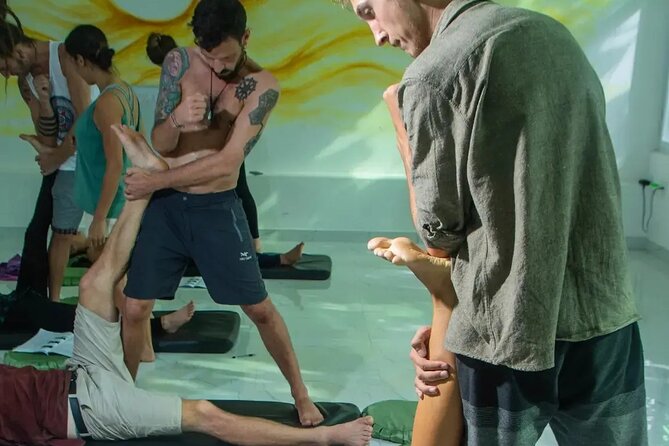
- 5–6 hours of daily practice keeps the learning practical and hands-on.
- Nadis (energy lines) theory + body work helps you understand why techniques feel the way they do.
- Yoga and guided meditation are part of the training, not side activities.
- Small group size (up to 20) makes it easier to get personal corrections.
- Raj and assistant support means you’re supervised while you practice techniques.
- Certificate and course books are included, so you leave with something tangible.
Thai massage training in Pokhara: what you’re really signing up for
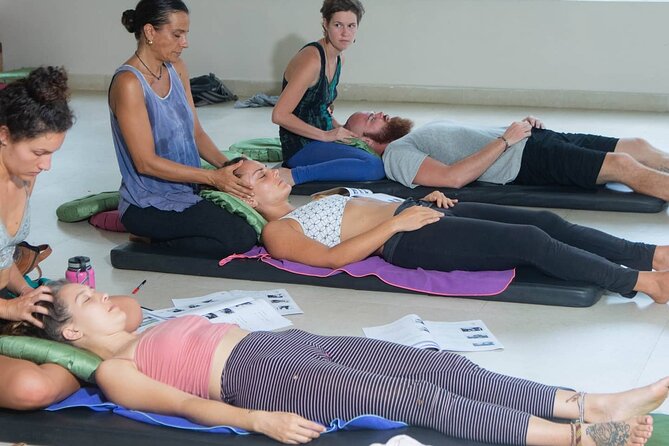
Thai massage is often sold as a bodywork session. This course treats it as a skill you can carry for life—and for other people, too. The focus is on a traditional, life-supportive approach that works through body movements, breath awareness, and meditative attention. You’re learning to pay attention to how your breath changes when your hands move, and how your partner’s body responds when pressure travels through the right angles and lines.
The “nadis” piece is important. In this training, energy lines (nadis) aren’t presented like magic trivia. They’re used as a framework to guide your awareness as you work—especially when you’re learning sequences and how to apply techniques across different parts of the body. One course review referenced unblocking meridians throughout the torso with careful supervision, which fits the same theme: technique plus awareness, not just technique alone.
If you’re already into yoga, this course can feel like a missing link between what you do on the mat and what you can do with your hands. If you’re brand new to Thai yoga massage, you’ll still get grounded basics, because multiple reviews emphasized that the program builds a strong foundation.
Daily flow: 5–6 hours of practice, plus yoga and meditation
A big part of the value here is time on task. You’re set to practice Thai massage, yoga, and meditation every day for roughly 5–6 hours. That’s the difference between a short workshop and real skill-building.
You can expect the days to feel like a rhythm:
- You learn a technique or sequence principle.
- You practice it with guidance and corrections.
- You use yoga and meditation to steady your awareness (so your movements stay controlled and your attention doesn’t drift).
- You repeat until your hands and your mind sync up.
That last part matters more than people think. Thai massage can look like it’s mostly stretching and pressure. In good training, it’s also about breath timing, body alignment, and mental presence. Meditation helps you notice tension—both yours and your partner’s—before it turns into sloppy technique.
Also, having both yoga and meditation included is useful for comfort and safety. Even if you came for massage, the movement training can help your body handle the practice week without feeling wrecked.
Learning the core sequence (and why “basics” matter)
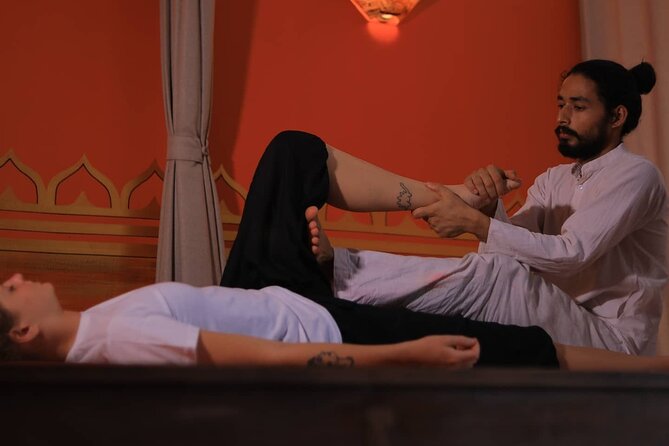
You’re not only learning a handful of tricks. The course aims at teaching a full basic sequence, plus additional techniques on top. That combination is the practical sweet spot: enough structure to work with immediately, plus extra options so you can keep improving after the training ends.
I like that the training doesn’t treat the massage like a one-size routine. With nadis as a mental map, you’re pushed to think about how pressure and movement relate to specific pathways through the body. That helps you avoid the common beginner mistake: forcing techniques without understanding what you’re aiming for.
From the reviews, Raj is described as patient and kind, with an approach that welcomes questions and suggestions. That matters because technique learning often hits a wall where you stop improving. A teacher who can spot what’s off—hand angle, body position, timing—can help you break through that wall fast.
And because you’re practicing for hours each day, you’ll notice what feels stable versus what feels awkward. The course structure helps you convert that awareness into repeatable form.
Nadis and energy-line awareness: useful theory, applied in practice
“Nadis” might sound esoteric at first. In this course, you’re learning them as a working concept tied to body sensations and technique choices. Instead of memorizing theory, you’ll practice with attention—so your massage isn’t just strong, it’s directed.
What I appreciate is that the training links consciousness with technique. You develop awareness of breath and movement, and you practice mind focus alongside physical work. That’s consistent with the course’s stated goal: mastering emotions and reducing mind fluctuations through different levels of practice.
One review mentioned model work under close supervision, including unblocking different meridians through the torso. Even if you don’t use the same language, you’ll likely feel the practical effect: better control, more careful pressure, and a more deliberate flow of attention while you work.
Also, the “energy lines” framework is a helpful teaching tool. When you know what you’re trying to track, you can troubleshoot what’s going wrong. Is your partner relaxed? Is your own body stable? Are you applying pressure along the line you meant to? Nadis gives you something to aim at beyond, It feels fine.
Yoga + meditation as a massage skill (not a separate class)
A lot of massage courses tack on relaxation or meditation at the end. Here, yoga and meditation are built into the learning day. That’s a smart design because Thai massage is both physical and mental.
Yoga supports technique by training mobility, alignment, and how you move your own body under load. If your body positioning is off, your hands will compensate. You end up doing the work with your shoulders instead of your whole frame. Yoga helps you stop that leak.
Meditation supports steadiness. You learn to connect with your inner self and build mindfulness for massage movements. That pays off in two ways:
1) You notice tension early.
2) You respond more calmly when something feels resistant.
That’s also where the compassion angle comes in. The course explicitly frames Thai massage as a tool for sensitivity toward yourself and others. In plain terms: you’ll be less likely to rush, more likely to check in, and more likely to practice with care.
Who teaches you at Karmayogi (Raj and the support team)
The training is run by Karmayogi Wellness and School, and reviews repeatedly connect the quality to Raj, the founder of KarmaYogi. Multiple course notes mention Raj teaching along with support from his sister and brother, with instruction that includes careful supervision while you practice.
From a practical perspective, supervision is what keeps a training week from becoming a free-for-all. You need corrections, especially when you’re learning positions and sequences that require your whole body mechanics to be aligned. Reviews also highlight that Raj explains clearly and organizes the sessions well, which reduces the stress of not knowing what you’re doing.
If you’re the type who learns best through feedback—especially hand placement, pressure angle, and partner positioning—you’ll likely feel comfortable asking questions here.
Pokhara’s lakeside base: the quiet advantage of location
This course is based at Karmayogi Yoga Retreat and School on Lakeside Rd in Pokhara. That location choice matters because training days are physical. You’ll want a setting that makes it easy to rest between sessions.
Pokhara also makes daily life easier. The course notes say it’s near public transportation. So if you’re staying in town for meals or downtime, you’re not locked into one bubble.
Since accommodation and food aren’t included, the location helps you find your own rhythm. You can choose what fits your diet, budget, and energy level for a demanding week.
Price and value: $487 for 7 days of skill-building
At $487 per person for about 7 days, this is priced like a serious training program—not a quick sampler. The value gets clearer when you look at inclusions:
- All fees and taxes
- Books and certificate
- Drinks and refreshments
What’s not included is just as important:
- Food
- Accommodation
- Travel tickets
So you’ll need to budget for lodging and meals separately. But compared with many training programs, including books and a certificate for the base price can make the deal feel more complete.
Also, the course includes about 5–6 hours of practice daily, which is a lot of guided time for the price point. If you’ve ever taken a workshop where you watch techniques for an hour and practice for ten minutes, you’ll recognize the difference instantly.
The small-group cap (up to 20) is another value factor. More attention tends to translate to better learning outcomes—especially when you need hands-on correction.
How to get the most out of the week (practical advice)
If you want this course to feel life-changing rather than just educational, come in with a mindset that you’re training a skill, not collecting a souvenir.
Here’s what I’d do:
- Treat the meditation and breath work as part of the technique. If you ignore it, you’ll miss half the course goal.
- Be honest about your body. If something pinches, hurts, or feels unstable, say so early so the instructor can adjust your practice.
- Practice with curiosity, not ego. Beginner bodies often move differently week to week. That’s normal.
- Ask questions during the practice blocks. Reviews mention that questions are welcome, so you won’t be penalized for learning.
Also, because the course includes yoga and meditation, you’ll likely get more from it if you’re comfortable being present with your own body sensations. That can be intimidating at first, but it’s where the training becomes more than stretches and pressure.
Who should book this Thai yoga massage retreat
This program fits best if you:
- Want a structured path into Thai yoga massage with guidance
- Learn well through hands-on practice and correction
- Enjoy yoga and meditation as part of a whole practice (not just as a warm-up)
- Want a foundation you can use on yourself and potentially for family or a community setting
It may be less ideal if:
- You’re only looking for a relaxing one-off massage session
- You don’t want to handle your own food and lodging during the week
- You’re expecting a sightseeing-first trip. This is a training retreat, not a tour of temples and markets all day
The maximum group size of 20 also means you’ll likely get a supportive atmosphere, especially if you’re comfortable learning alongside like-minded people, including yogis and healers.
Practical “before you go” checklist (based on what’s included and missing)
Because food and accommodation aren’t provided, plan those basics early. The training starts at 12:00 pm at Karmayogi Yoga Retreat and School (Lakeside Rd 6, Pokhara 33700), and it ends back at the meeting point. So you’ll want your transport plans to match a midday start.
Also, bring items that help with a physical week:
- Comfortable practice clothes for yoga and Thai massage practice
- Something simple for hydration (the course includes refreshments, but you’ll still benefit from your own bottle habits)
- A small bag for your books/certificate documents once you receive them
The good news: the course includes books and a certificate, so you won’t arrive needing to source training materials.
Should you book the 7 Days Thai Yoga Massage Training in Begnas, Nepal?
If you want genuine hands-on training, this is an easy recommendation. The biggest reasons are practical: 5–6 hours of practice daily, a focus on core sequences, and teacher supervision with a small-group setting. Add yoga and meditation woven into the learning day, and you get a full-body skill you can carry forward.
Before you book, do two reality checks:
1) Are you ready to handle food and accommodation on your own during training?
2) Do you want to focus on learning and practice more than sightseeing?
If you answered yes to both, this 7-day Thai yoga massage training in Pokhara looks like solid value—and a course where you’ll leave with technique structure, not just inspiration.
FAQ
How long is the Thai Yoga Massage Training and Retreat?
It runs for 7 days (approx.).
Where does the training take place?
The start and end meeting point is Karmayogi Yoga Retreat and School, Lakeside Rd 6, Pokhara 33700, Nepal.
What time does the experience start?
Start time is 12:00 pm.
How much does it cost?
The price is $487.00 per person.
What’s included in the price?
Included are all fees and taxes, books and certificate, and drinks and refreshments.
What is not included?
Food and accommodation, and travel tickets of any kind are not included.
Is there a group size limit?
Yes. The experience has a maximum of 20 travelers.
How much massage/yoga/meditation practice happens each day?
You can expect 5–6 hours of Thai massage, yoga, and meditation each day.
When do I receive confirmation after booking?
Confirmation is received at the time of booking.
What is the cancellation policy?
You can cancel for a full refund up to 24 hours before the experience start time. Canceling less than 24 hours before the start means no refund.