REVIEW · OSAKA
Osaka:Bamboo Healing Massage at the Temple <90-min>
Book on Viator →Operated by Japanese Massage 唯一無二-the one & only- · Bookable on Viator
A bamboo stick and a temple tea break. This Osaka experience pairs a soothing foot bath and full-body oil massage with fascia release, then ends with a quiet tea ceremony and a yukata photo.
I really like how the session feels structured but still calming: a temple welcome in kimonos, a short orientation to how worship works, and then the massage focuses on tension relief with bamboo-stick technique.
One possible drawback: the meeting point can be a little tricky to find, so use the full address and map pin—not blurry directions.
In This Review
- Key highlights you’ll actually feel
- Osaka temple calm, starting at the right door
- Kimono welcome and temple basics before anything touches your body
- The foot bath: the calm warm-up that makes the massage work
- Full-body oil massage with your chosen essential oil
- Bamboo stick fascia release: a technique with a different feel
- Shrine time and the short meditation moment
- Tea ceremony with wagashi: why the ending matters
- The yukata photo: a souvenir you’ll actually use
- Timing, duration, and how to plan your day
- Price and value: what $130.31 is really buying
- Who should book this (and who might not)
- Should you book this Osaka temple massage?
- FAQ
- FAQ
- How long is the experience?
- What’s included besides the massage?
- Where do we meet?
- Is this private or shared with other people?
- Do I get to wear a yukata?
- What kind of massage is it?
- Is there a tea ceremony?
- How do I receive the tickets?
- Can I bring a service animal?
- What is the cancellation policy?
Key highlights you’ll actually feel
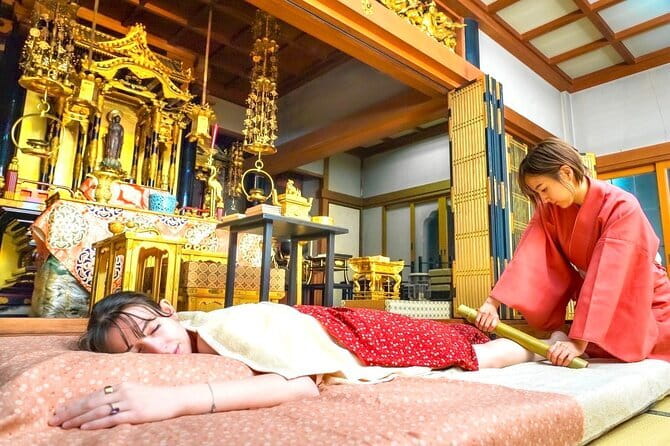
- Bamboo-stick fascia release as the centerpiece technique for working through stubborn tightness (results vary, but the approach is focused).
- Foot bath start to slow your body down before the massage begins.
- You pick your essential oil for the full-body oil massage.
- Yukata + souvenir photo so the cultural part leaves you with more than just photos you took yourself.
- Tea ceremony with wagashi to close out the experience at a slower pace.
- A private group setting means it stays personal, not rushed or crowded.
Osaka temple calm, starting at the right door
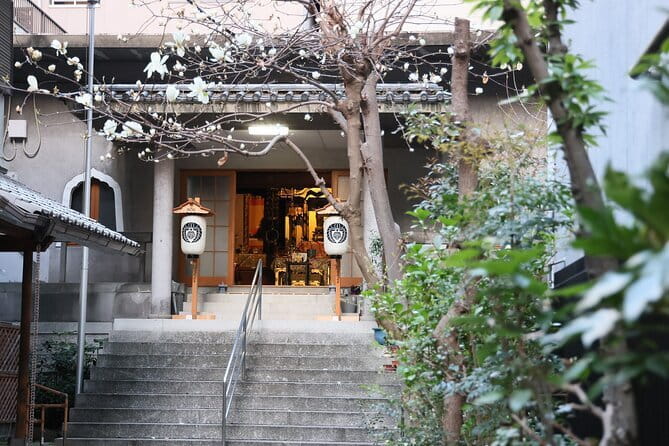
This experience takes place in Osaka’s Nishi Ward area, with the meeting point listed at Tossa de coracao 1-chōme-6-19 Kitahorie, Nishi Ward, Osaka (550-0014). You’ll start and end there, which keeps things simple after the tea ceremony and photo time.
The biggest practical tip here is the one you’ll thank yourself for later: the meeting location can be easy to miss if you’re only relying on shortened online directions. I’d treat this like a museum meet-up—use the full street address and drop a pin in your map app before you go. That one move cuts down stress fast, especially if you’re traveling solo or trying to fit this between other Osaka stops.
You’re also in a private format, which matters more than you might think. In a massage and temple setting, having your group handled directly (instead of blended into a bigger crowd) makes the experience feel less like a show and more like you’re being guided through a quiet ritual at the right pace.
You can also read our reviews of more tours and experiences in Osaka.
Kimono welcome and temple basics before anything touches your body
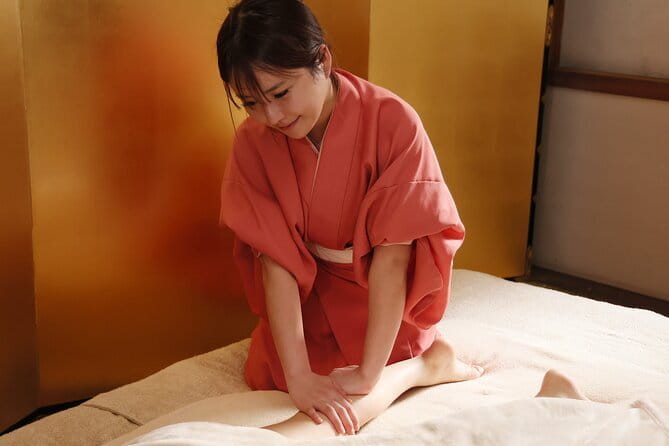
When you arrive, staff in traditional kimonos greet you and you’ll have the chance to wear a yukata. That’s not just for photos. It helps set the tone—your whole body shifts into a more formal, slower mode as soon as you’re in that clothing.
Before the massage, the staff explain the temple’s history and origins, plus the basics of how to worship. You’ll use guidebooks during that orientation. That part is valuable even if you’re not a temple expert, because it gives you a mental script for what you’re seeing and why certain moments are treated with care.
If you care about cultural context, this is where it clicks. A massage is relaxing, sure. But doing it inside an active tradition—and being gently taught how people participate—turns the experience from self-care into something you can actually understand. You’ll spend less time guessing what’s expected and more time being present.
The foot bath: the calm warm-up that makes the massage work
The program starts with a soothing foot bath, which sounds simple until you realize how much it changes the next step. Your feet are full of sensors, tension points, and travel-day fatigue. Soak those first, and your whole body tends to settle.
This is also the point where you’ll feel the difference between a quick “massage appointment” and a guided ritual. The foot bath gives your brain a clear signal: now we slow down. From there, the staff transition you into the full-body treatment smoothly, without that awkward moment where you’re not sure what comes next.
If you’ve had massages in normal spa settings, you’ll recognize the goal—relaxation. But the temple start makes it feel more intentional, like you’re stepping into a calm room rather than just booking a service.
Full-body oil massage with your chosen essential oil
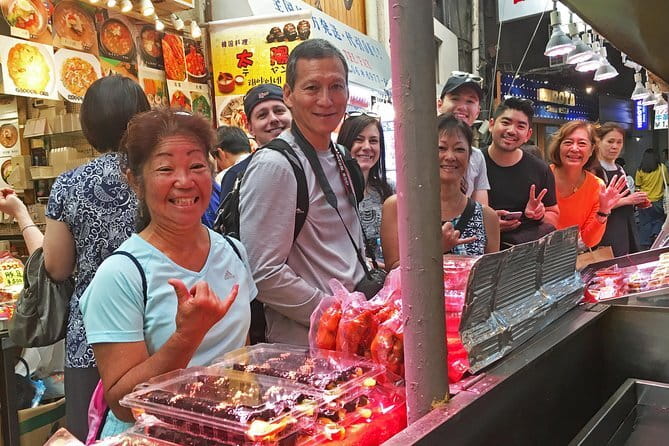
Next comes the main event: a full-body oil massage designed to release tension and rejuvenate your body. You also get to use your favorite essential oil, which is a smart touch for a couple reasons.
First, scent changes the experience. Aroma can calm you, energize you, or simply make you feel comfortable. Second, it gives you a bit of control in a setting where you might otherwise worry you’re not doing things “right.”
The massage is described as luxury-style, and the overall flow is meant to help you feel refreshed, not just worked on. In practice, what you’ll likely notice is that the session aims for smooth stress release, not aggressive pounding. The earlier foot bath and temple etiquette lesson also support that softer tone.
One caution: oil-based massages can feel strong if you’re sensitive to touch pressure. If that’s you, keep your comfort level in mind and pay attention to how your body responds early in the session. You want the treatment to feel supportive, not overwhelming.
Bamboo stick fascia release: a technique with a different feel
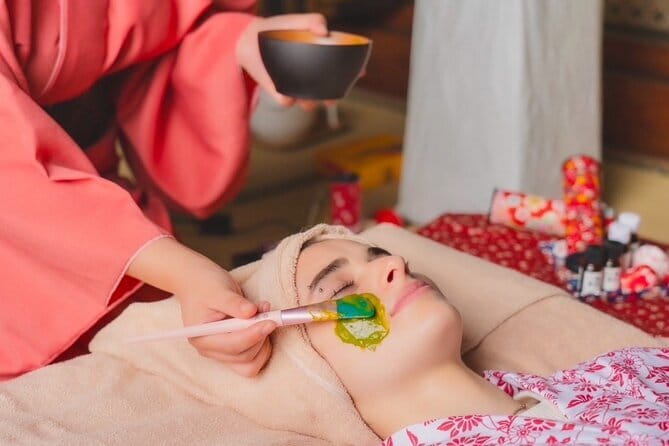
The key technique here is fascia release using a bamboo stick. Fascia is the connective tissue that surrounds muscles, and the goal of fascia-focused work is to help loosen tightness that can hang around even after you stretch.
Now, let’s keep expectations realistic. You won’t walk out of any massage with guaranteed medical results. But you can still feel a difference in how your body moves and how your tension “holds.” Bamboo-stick work tends to be rhythmic and precise, and that controlled method can make tight areas easier to notice.
What I like about this approach is that it gives the session its own identity. It’s not just a generic massage; it has a clear signature technique. If you’ve never tried fascia release before, this is an easy way to experience it in a calm, guided setting rather than feeling like you’ve wandered into a clinical experiment.
Shrine time and the short meditation moment
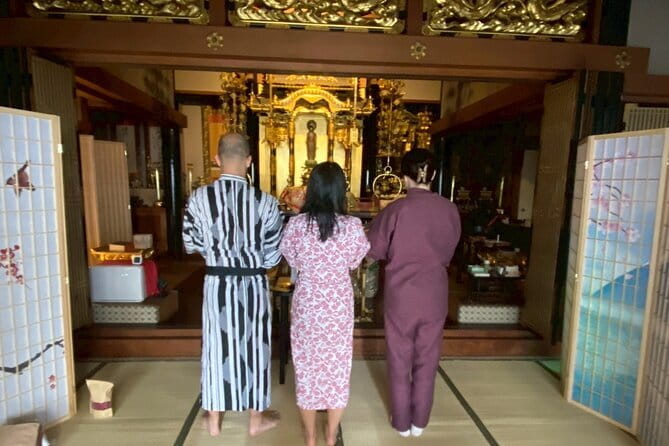
In addition to the massage and tea ceremony, you’ll also have a short meditation in the shrine. This is a small add-on, but it changes the pacing.
After the bodywork, meditation helps your nervous system switch gears. It’s also a gentle bridge between the physical part of the experience and the cultural part that comes next. If you like travel experiences that calm you down instead of just filling your day, this is exactly that kind of pacing choice.
The temple setting helps here. There’s less “performance” and more quiet movement through moments, like someone is guiding you through steps rather than trying to fill every second with activity.
Tea ceremony with wagashi: why the ending matters

The experience closes with an authentic tea ceremony, including wagashi (traditional Japanese sweets). This ending is more than a nice cultural flourish. It’s also how your body absorbs what just happened.
After massage and meditation, you’re less likely to immediately switch back into travel mode. The tea ceremony gives you a small pause to reset—sip, breathe, and let your body come down from the stimulation of massage work.
Wagashi are part of that reset too. They’re not just desserts you eat quickly. They’re usually chosen to match the seasonal feel and the ceremony vibe, and they add a gentle sweetness to the overall calm. Even if you don’t know all the details, the slow rhythm makes the experience feel complete.
And because you’re doing this within the temple atmosphere, the tea ceremony feels like it belongs to the space, not like a separate activity tacked on afterward.
The yukata photo: a souvenir you’ll actually use
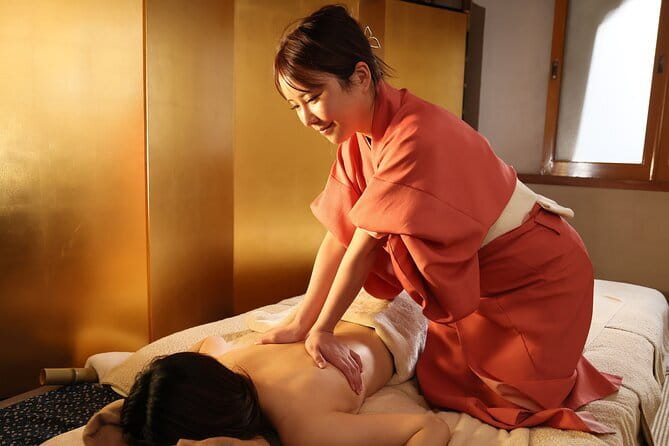
One of the highlights people remember most is the souvenir photo taken in a yukata. This matters for two reasons.
First, it captures a moment you can’t recreate later by yourself. You get the clothing context and the temple setting together. Second, it gives you a memory that isn’t just a picture of a landmark. It’s you inside the experience.
They also provide a complimentary photo, which keeps costs predictable and reduces the awkwardness of negotiating souvenir add-ons during a calm moment. If you like travel photos but hate feeling like you’re “on assignment” all day, this is an easier, more guided way to get a keepsake.
Timing, duration, and how to plan your day
The description gives a couple ways of thinking about time: the course is often framed as a 90-minute experience, while the overall duration is listed as about 2 hours. In practical terms, plan for about two hours at the temple so you’re not rushing to catch trains or deadlines.
That’s especially helpful because this kind of experience has quiet transitions:
- welcome and orientation
- foot bath
- massage and bamboo fascia release
- shrine meditation moment
- tea ceremony with wagashi
- yukata photo
If you schedule this back-to-back with a busy dinner reservation, you’ll probably feel rushed during the final tea part, and that’s the exact moment you want to slow down. Build in a bit of buffer, even 30 minutes, so you can leave feeling calm rather than sprinting.
Price and value: what $130.31 is really buying
At $130.31 per person, this is not a budget massage. But it is also not just a massage.
You’re paying for a package that combines:
- temple setting and a short orientation to the temple’s background and worship basics
- foot bath
- full-body oil massage using an essential oil you like
- bamboo-stick fascia release (the signature technique)
- shrine meditation and an authentic tea ceremony with wagashi
- a complimentary yukata photo
- a private group experience, which usually costs more than group formats in general
So the value here is about “experience density.” If you compare it to separate bookings—massage plus cultural activity plus tea plus photo—this package keeps everything in one calm flow. That’s where the price starts to make sense.
If you’re the kind of traveler who loves one main activity plus smaller meaningful moments, this fits your style. If you only want a simple 60-minute massage and nothing else, you may feel like you’re paying for ceremony too. For many people, though, the ceremony and guidance are what transform the massage from a service into a story you’ll remember.
Who should book this (and who might not)
This is a great fit if you want:
- a temple-based, culture + relaxation experience in one slot
- massage plus calm structure (foot bath, massage, meditation, tea)
- a yukata photo souvenir that feels connected to what you’re doing
- a private setting where staff can focus on your group
It might not be the best fit if:
- you dislike temple etiquette and prefer a purely secular spa vibe
- you’re short on time and cannot spare about two hours
- you’re extremely sensitive to touch pressure or strong sensations during massage (you’ll want to be mindful of how you feel early on)
Also, if your travel schedule already has heavy cultural sites, this is a smart counterbalance. It gives you a break from walking while still feeling deeply “Japan” in tone.
Should you book this Osaka temple massage?
Yes—if you want relaxation with real cultural context, this is a strong pick. The best reason to book is the way the elements connect: foot bath sets the mood, oil massage and bamboo fascia release do the work, and shrine meditation plus tea ceremony give you a slow landing at the end.
Before you confirm, plan for the one thing that can steal your peace: finding the meeting point. Use the full address and a map pin, arrive a bit early, and you’ll keep this day feeling calm instead of stressful.
FAQ
FAQ
How long is the experience?
It’s listed as about 2 hours in total, and the program is described as a 90-minute course.
What’s included besides the massage?
You get a foot bath, a full-body oil massage with your chosen essential oil, bamboo-stick fascia release, a short meditation moment in the shrine, and an authentic tea ceremony with wagashi. You’ll also have a complimentary photo in a yukata.
Where do we meet?
The meeting point is at Tossa de coracao 1-chōme-6-19 Kitahorie, Nishi Ward, Osaka, 550-0014, Japan. The experience ends back at the meeting point.
Is this private or shared with other people?
It’s a private tour/activity. Only your group will participate.
Do I get to wear a yukata?
Yes. You’ll have the opportunity to wear a yukata during the experience.
What kind of massage is it?
It’s a full-body oil massage designed to release tension and rejuvenate you, plus fascia release using a bamboo stick. Your favorite essential oil is used.
Is there a tea ceremony?
Yes. The program ends with an authentic tea ceremony, including wagashi.
How do I receive the tickets?
You’ll receive a mobile ticket.
Can I bring a service animal?
Yes, service animals are allowed.
What is the cancellation policy?
Free cancellation is available up to 24 hours in advance for a full refund. If you cancel less than 24 hours before the start time, the amount paid is not refunded.